
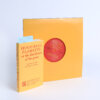
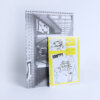
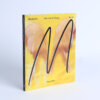
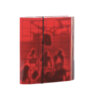

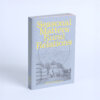


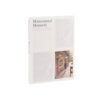
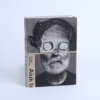
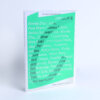
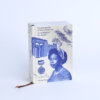
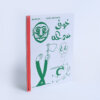
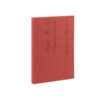
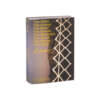
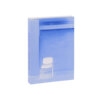
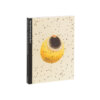
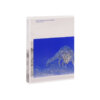
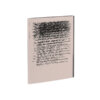
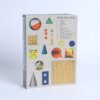
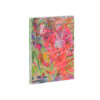
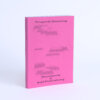
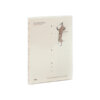

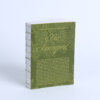
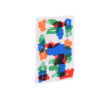
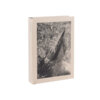

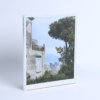

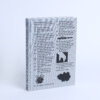

New Surface Research is a physical expression of Henri Jacobs’ research into the two-dimensional, the flat and two-sided nature of surfaces. Jacobs has carried out a wide range of experiments into the merging of paper surfaces by interweaving these with one another in strips. The liveliness of this exploration of materiality, geometry and woven patterns is put across superbly in this book-as-object. This starts with the decision to bind no less than 82 sheets and the cover using centre stitching. This allows the paper to retain a sense of its material relationship to the surfaces Jacobs himself worked with. The impression made by the book – a stack of paper folded double – is emphasised by the black-and-white stripes on the book’s fore edge – in particular on the fore edges not trimmed evenly on the cut, resulting in a ‘ fish mouth’ effect that serves to thicken these stripes.
Jacobs’ often woven works, with their unravelled edges, are printed on a black background, which serves to lift them from the paper. The pictorial research into tiles and weaving patterns and images of rugs and carpets included on the white pages, points in an unforced way to the context within which this research takes place.
One of the properties of surfaces investigated by Jacobs, namely the two-sidedness of a surface, has been tellingly captured by representing recto and verso sides in succession across either a page or a spread. In some places, the recto of the work corresponds to the recto side of the page (and the same goes for the verso sides), resulting to a certain extent in replicas of the work in question. In other places, a choice has been made to include the two sides of works on opposite pages in a spread, which allows the book to look at the actual works from a different perspective. The combination of these forms of double-sided representation make New Surface Research a phenomenal publication that takes a deep dive into Jacobs’ work.
Finally, the fold-out cover has been inventively used to form a partly visual index, including all of the captions. Experiments with complex covers are by no means unusual, but seldom is the result as user-friendly and of such added value to the content as here. New Surface Research demonstrates great professional competence: both in terms of its treatment of the subject matter and as a book-as-object, and the jury was unanimous in its recognition of this.