
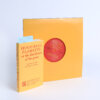
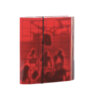
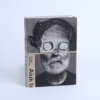
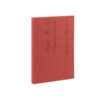
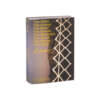
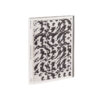
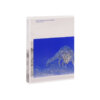
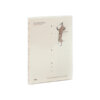
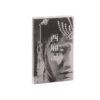
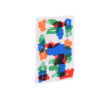
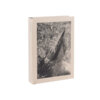
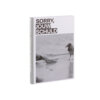
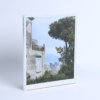

During the early sixties, the French government carried out nuclear experiments in the Sahara, in former French colony Algeria. To date, France has still not released the official documentation of this history – an act of violence against the Algerian population, economy and living environment. In Colonial Toxicity, architectural historian Samia Henni has nevertheless succeeded in opening up the story of radioactive violence in the Sahara through smuggled, leaked and otherwise available archival materials.
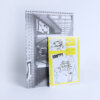
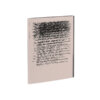
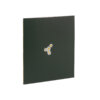
Colonial Toxicity has all the ingredients for an intimidating, impenetrable document. But the clarity of design choices make this topical story accessible. The choice of paper is pivotal to this: the bulky paper results in a light, soft and supple book, which lies open well, even at the spreads at the front and back. What’s more, in spite of the wide range of different types of visual material presented – from video stills to archive scans, often at low resolution – the book makes a calm impression thanks to the duotone printing and superb picture editing. The ink and paper colours contrast sufficiently with one another to allow the text portions to be easily legible, and in combination with the images the classic, neat typography creates a serene ambiance. The resulting spreads mean that this extensive piece of research is intriguing, rather than off-putting.