
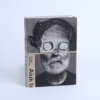
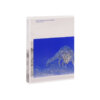
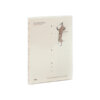
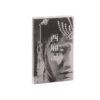
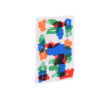
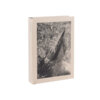
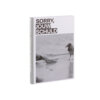
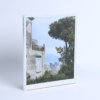

The photography project recorded in ‘Om (Mother), is a highly welcome building block in the conceptualisation of the oppression of Palestinians. Women from eight Palestinian families living in Tel Rumeida, a neighbourhood in the Palestinian city of Hebron, record their lives in photographs. This neighbourhood is one of the areas most intensely surveilled by the Israeli military, meaning that everyday life for the Palestinian population is coloured by ever-present hostility and menace. Within this context, women spend much of their time at home and have all but disappeared from the streetscape; making the fact that these eight matriarchs and their female offspring record their day-to-day lives in precisely this context a form of resistance. The project was initiated by Barbara Debeuckelaere, who has been to Hebron many times, including with Adam Broomberg, who wrote an essay for `Om and introduced Barbara to the Tel Rumeida neighbourhood.
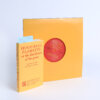
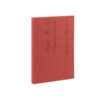
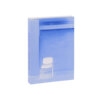
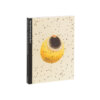
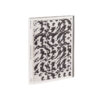
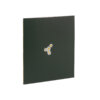
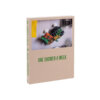
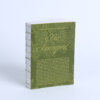
‘Om (Mother) sits easily in the hand – it is an accessible little book. The surprising warmth of the often domestic, family-oriented atmosphere of the photos is supported by the choice of brown, fibrous paper for the text sections. The few photos which are also printed on this brown paper, as part of the introduction and the epilogue, stand out all the more for it. At the same time, a constant sense of threat is palpable throughout the book, and this is a good counterpart to the warmth of many of the photos – together, these give a sense of life in Tel Rumeida. The feeling of threat is achieved by printing the photos surrounded by black, with a thick, black border along the fore edge on every page, repeated on the text pages. This combination of warmth and darkness impressively puts across the feeling of everyday life under oppression.
The fonts are well coordinated: the script used for the Arabic letters and the serif Latin font complement one another well, while the monospace font used for the paratext provides a nice contrast. The binding tape on the spine runs over the text on the title page by a few millimetres, and looks like a later addition to what must originally have been an open spine. Linen running on less far – for example, symmetrical in breadth to the black border on the fore edge – would have made a neater impression. The text ‘Free Palestine’ on the back of the cover and on one of the more ominous photos, of a plume of smoke and flames on the inside of the dust jacket, effectively reveals the context within which this photographic project was undertaken.