
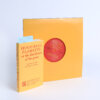
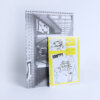
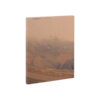
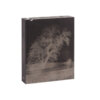
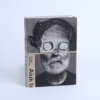
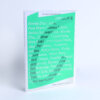
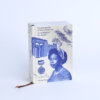
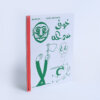
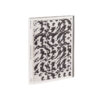
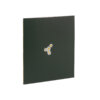
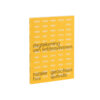
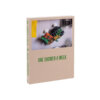
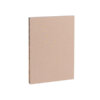
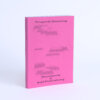
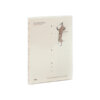
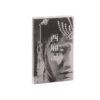
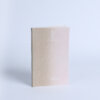
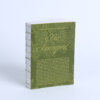
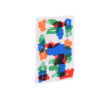
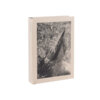
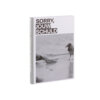
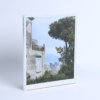
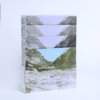
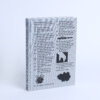

In 2006, artist Simone Engelen – 16 years of age at the time – was on an exchange visit to the United States. In 2022 she went back there, this time accompanied by her mother, and undertook a road trip with the aim of confronting a traumatic experience she went through during her exchange year in high school. The first thing that jumps out when we see 27 Drafts is the tangle of handwritten sentences printed in black gloss foil, over one another, on the coarse grey cover. These are the 27 attempts Engelen made to write a letter to the two young men who sexually abused her. This largely illegible tangle is an intriguing introduction to the photo book, revealing something of the darkness of the material, reinforcing the sense the book gives of being a kind of exercise book. This feeling is reinforced by the choice to use the cahier technique.
Between the covers, two streams of information run through one another in a natural way. A personal investigation is documented on brown, fibrous paper in the form of notes, photographs and other images. These pages are printed in negative, giving them a dark, oppressive feel. In the other information flow, Engelen uses visual reporting to draw us into the experience of the road trip she undertook, more than fifteen years on from her traumatic experience. Black bands serve as margins framing these photos top and bottom, giving the reportage a filmic feel. The lithography and printing of the photos are excellent, with deep blacks and crystal clear light shades.
Included as a loose insert is an e-mail from a good friend of Engelen’s who also happens to be an attachment and trauma therapist. This seemingly accidental find turns out to be a succinct piece of cultural criticism of the dysfunctional way in which our society deals with sexual abuse. Society badly needs a different narrative that makes it possible for the victims of abuse to develop a different perspective on their experience – as Engelen was able to thanks to the camera, which created the required distance. The decision to include this e-mail as a separate sheet emphasises that this is subordinate to the actual, visual story; nevertheless, this enclosure does offer valuable context.