
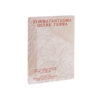
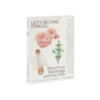
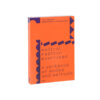
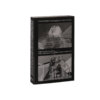
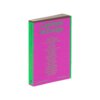
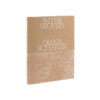
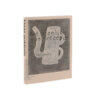
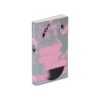
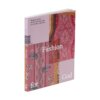
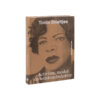
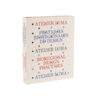
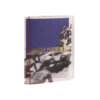
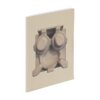

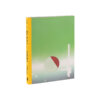
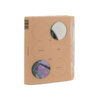
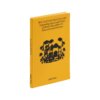
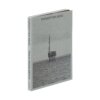
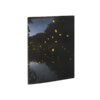
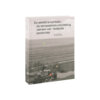
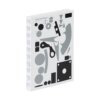
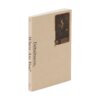

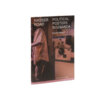
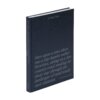
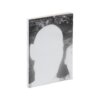
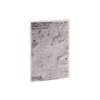
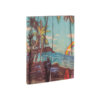
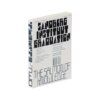
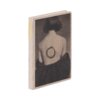
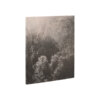
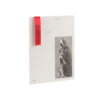
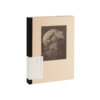
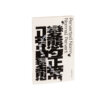
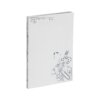
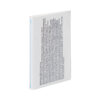
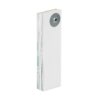
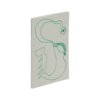
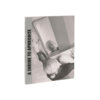
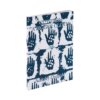
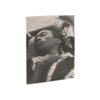
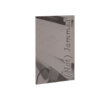
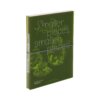



This pocket-sized book has been designed completely to do justice to its contents: walking. Containing contributions on walking as a research practice, this book has been designed and produced in such a way that as an object it is as perfectly suited as possible to be read while walking. The focus of these efforts is clearly on being able to hold and use the book in one hand.
In practical terms, this means that the body text continues on the right-hand pages only, with the left-hand pages carrying all kinds of other information. In addition, the book does not have a rigid cover that makes it difficult to hold, but is coverless and extremely flexible thanks to a minimal, cold-glued spine, which means that, essentially, the book has been turned inside out.
The result is a pocket-sized book unparalleled in terms of its form, while at the same time being recognisable. On the one hand, this little book is not much more than a paperback without a cover. On the other, the innovative binding shows us how to use it. This experiment has resulted in a completely new type of book. Not only that, but Walking as Research Practice is a great example of good design that needn’t be expensive: we are looking at a two-colour Risograph print and everyday paper.
The selection of this little book as a Best Dutch Book Design was unanimous and immediate; its subsequent submission to Schönste Bücher aus aller Welt resulted in the highest accolade being granted: the Golden Letter award. Designer Jana Sofie Liebe, who made Walking as Research Practice as part of her studies at the Gerrit Rietveld Academie, has achieved a remarkable accomplishment.