
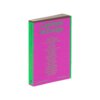
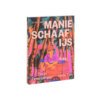

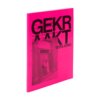
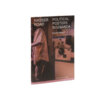
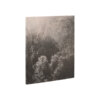
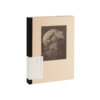
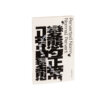
Open-Ended Visions of Possibilities. patricia kaersenhout

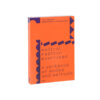
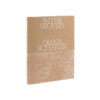
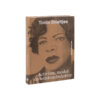
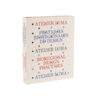
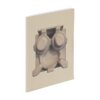
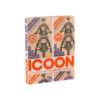
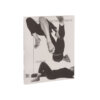
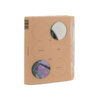
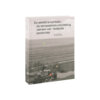
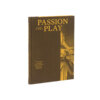
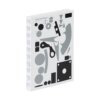
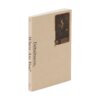
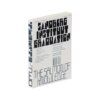
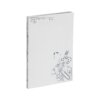
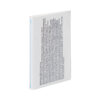
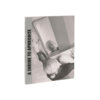
Book coverOpen-Ended Visions of Possibilities. patricia kaersenhout

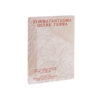
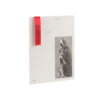
Holding this stack of papers entitled ‘Open-Ended Visions of Possibilities’, you know you have a very exciting object in your hands. This composition of works by patricia kaersenhout invites the reader/viewer to interact. The decision to bind the book using only a piece of red elastic stretched unattached over the fold in the pages, means that the choice of whether this book is bound or not, lies with you, the reader.

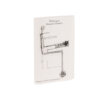
This decision for (almost) loose pages is taken further by then using conventional, sequential page numbering, with left- and right-hand pages that relate to one another. In fact, the picture editing is geared to this sequence of pages through continuous images and visual rhyming. But you can disassemble this well-thought-out sequence of content: it is possible to uncouple images from their counterparts and abruptly break up the texts – simply by removing the elastic band from the book and shuffling the sheets. So the makers give us the freedom to relate to the themes in a highly personal way; while at the same time passing on a sense of responsibility – after all, breaking with the norm is never without consequences.

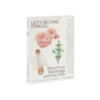
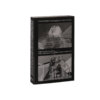
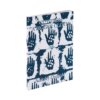
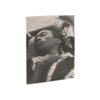
Thanks to the multiplicity of (types of) images, the book has a playfully hectic character, to which the choice of materials convincingly adds. No less than fourteen different types of paper are used; furthermore, neither image nor text seem to have any special relationship to their physical bearer, switching casually from coated to uncoated paper (for example).

All things considered, the makers have found a form within which the work of patricia kaersenhout (which operates at the intersections of Black feminism, scratching through archives and historical silences) is presented in both a rigid and an open form, and which succeeds in bringing about an encounter.

Edition: 2023
Date of publication: 23 juni 2023
Author: Chandra Frank, Eleonoor Jap Sam, patricia kaersenhout (editing and composition); Barby Asante, La Vaughn Belle, Ingrid Braam, Jeannette Ehlers, Chandra Frank, Sasha Huber, Roel Hijink, patricia kaersen-hout, Rashid Novaire, rolando vázquez, Gloria Wekker, Selene Wendt
Language: English, Dutch
Translator: Jimini Hignett
Final editor: patricia kaersenhout, Eva van der Schans
Image editor: patricia kaersenhout, Eva van der Schans
Artist: patricia kaersenhout
Publisher: Jap Sam Books, Prinsenbeek
Graphic designer: Inedition (Eva van der Schans) (Haarlem)
Lithographer: NPN Drukkers (Wim de Heer), Breda
Printer: NPN Drukkers, Breda
Binder: NPN Drukkers, Breda
Size book block (w x h x d in mm): 185 x 255 x 18
Number of pages: 256 + 32
Print run: 1500
Price: € 35
ISBN: 9789492852915
Font and foundry: Prestige Elite (Adobe Originals), Helvetica Neue (Linotype), SF Pro Text (Apple Fonts)
Binding style: Loose-leaf: folded 4-page sheets stacked and held together by a red elastic band; cahier is sewn with black thread and not trimmed evenly on the cut (concave block, so called ‘fish mouth’); in the heart of the book, a stapled insert section
Paper for interior (grammage): 85gsm Arcoprint Milk (Fedrigoni), 90gsm Arena Natural Rough (Fedrigoni), 90gsm UPM Sol mat (Igepa), 100gsm + 115gsm Magno Gloss (Igepa), 115gsm Gardapat Bianca (Inapa), 115gsm Magno Plus Silk (Igepa), 120gsm Print Speed Offset (Antalis), 130gsm Fly06 extrawit (Inapa), 135gsm Magno Volume (Igepa), 135gsm Nautilus Classic (Antalis), 150gsm Lessebo Design Smooth Natural (Igepa), 100gsm Muskat Grey (Igepa), 150gsm Novatech (Antalis), 90gsm Munken Lynx (Antalis)
Material cover (grammage): 300gsm Cyclus Offset, Antalis
Special features: Cover printed in CMYK, gold foil (KURZ Luxor Alufin 386 - Hensen foliedrukkers, Oirschot); interior printed partly in CMYK and partly in Pantone Reflex Blue; 14 different papers (a leftover batch from the warehouse of NPN Drukkers; in a 32-page cahier (90gsm Munken Lynx, 170 x 240 mm) printed in black